Florence (Italian: Firenze /fiˈrɛnʦe/, Old Italian: Fiorenza, Latin: Florentia) is the capital city of the Italian region of Tuscany and of the province of Florence. It is not only a beautiful city along the River Arno, it's filled with art, culture and history too. Bearing the title of Cradle of the Renaissance, the streets of Florence is really an open gallery which is an eye-opening experience to me. The famous people who have come from here and gone on to create history. eg Gallileo, Leonardo Da Vinci. This city was home to Michelangelo too.
%5B2%5D.jpg "FLO (7)")
A bronze copy of the David by Michelangelo in the Piazzale Michelangelo.
%5B3%5D.jpg "FLO (23)")

%5B2%5D.jpg "FLO (27)")
%5B3%5D.jpg "FLO (24)")
%5B3%5D.jpg "FLO (33)")
%5B3%5D.jpg "FLO (39)")
The Basilica di Santa Croce (Basilica of the Holy Cross) is the principal Franciscan church in Florence, Italy, and a minor basilica of the Roman Catholic Church. . The site, when first chosen, was in marshland outside the city walls. It is the burial place of some of the most illustrious Italians, such as Michelangelo, Galileo, Machiavelli, Foscolo, Gentile, Rossini, and Marconi, thus it is known also as the Temple of the Italian Glories (Tempio dell'Itale Glorie).

Basilica di Santa Croce is situated on the Piazza di Santa Croce.
%5B3%5D.jpg "FLO (9)")

Statue of Dante Alighieri stands outside of the Basilica di Santa Croce which holds Dante's empty tomb. The pedestal of the statue reads "To Dante Alighieri From Italy 1865" and is flanked by lions, the traditional guardians of the city.
Dante Alighieri was an Italian poet of the Middle Ages. His central work, the Divina Commedia, is often considered one of the greatest literary works composed in the Italian language and a masterpiece of world literature.
From the Basilica di Santa Croce, we walked a short distance to the Piazza della Signoria and it’s Signoria Palace. The was the seat of the early government of Florence.
%5B3%5D.jpg "FLO (11)")
The "bronze equestrian statue of Cosimo I" by Giambologna (1594). Cosimo I was Duke of Florence from 1537 to 1574, reigning as the first Grand Duke of Tuscany from 1569.
%5B3%5D.jpg "FLO (49)")
The Fountain of Neptune by Bartolomeo Ammannati (1575)
%5B2%5D.jpg "FLO (50)")
%5B3%5D.jpg "FLO (13)")
Benvenuto Cellini's statue Perseus With the Head of Medusa
%5B3%5D.jpg "FLO (57)")
%5B3%5D.jpg "FLO (58)")
%5B3%5D.jpg "FLO (54)")
In the legendary history of Rome in which the first generation of Roman men acquired wives for themselves from the neighboring Sabine families. (In this context, rape means "kidnapping")
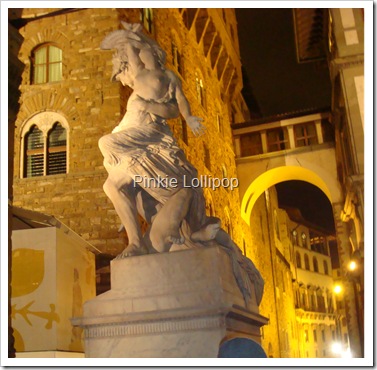
%5B3%5D.jpg "FLO (55)")
%5B3%5D.jpg "FLO (15)")
%5B3%5D.jpg "FLO (52)")
%5B3%5D.jpg "FLO (59)")
%5B3%5D.jpg "FLO (14)")
The basilica is one of Italy's largest churches, and until the modern era, the dome was one of the largest in the world, being surpassed in width only by that of the Pantheon in Rome. It remains the largest brick dome ever constructed.
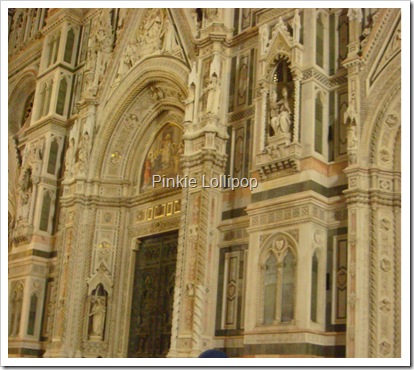
Main portal of the cathedral
%5B3%5D.jpg "FLO (65)")
%5B3%5D.jpg "FLO (63)")
The Florence Baptistry or Battistero di San Giovanni (Baptistery of St. John)
%5B3%5D.jpg "FLO (68)")
%5B3%5D.jpg "FLO (64)")
%5B3%5D.jpg "FLO (75)")


%5B2%5D.jpg "PISA (17)")
%5B3%5D.jpg "PISA (24)")
%5B1%5D.jpg "PISA (12)")

%5B1%5D.jpg "PISA (28)")
%5B3%5D.jpg "PISA (30)")
.jpg "PISA (32)")
%5B6%5D.jpg "PISA (81)")
.jpg "PISA (5)")
.jpg "PISA (10)")
%5B3%5D.jpg "PISA (3)")
%5B2%5D.jpg "PISA (7)")
%5B2%5D.jpg "PISA (35)")
%5B2%5D.jpg "PISA (42)")
%5B2%5D.jpg "PISA (52)")
%5B2%5D.jpg "PISA (65)")
%5B2%5D.jpg "PISA (43)")
%5B2%5D.jpg "PISA (59)")
%5B2%5D.jpg "PISA (60)")

%5B2%5D.jpg "PISA (63)")
%5B2%5D.jpg "PISA (71)")
%5B2%5D.jpg "PISA (77)")
%5B8%5D.jpg "PISA (79)")
%5B3%5D.jpg "PISA (67)")
%5B3%5D.jpg "PISA (20)")
%5B3%5D.jpg "PISA (25)")

%5B8%5D.jpg "ROME (23)")
%5B22%5D.jpg "ROME (19)")
%5B11%5D.jpg "ROME (20)")
%5B7%5D.jpg "ROME (21)")

